Award-Winning Prickly Pear Jelly Arizona State Fair
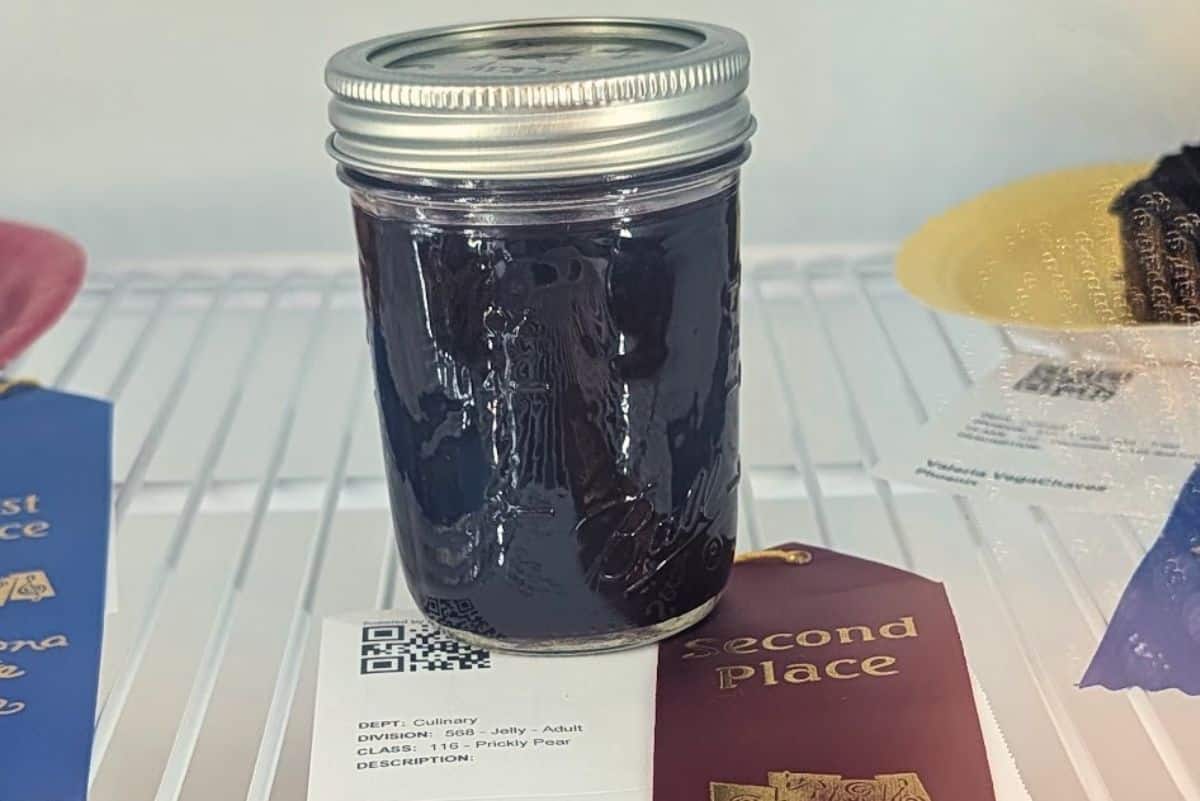
I'm Rhyan Geiger, a registered dietitian in Phoenix, and my homemade prickly pear jelly won 2nd place at the 2026 Arizona State Fair. In this post, I share how I harvest prickly pears, how I make the juice, and how to get prickly pear jelly to set. Subscribe to get my full award-winning recipe free by email.
This summer, I got laid off. To fill my free time, I challenged myself to try one "unhinged" thing every day. One day, I decided to learn everything I could about prickly pears, the bright magenta fruit growing on cactus all over Phoenix. That rabbit hole led me to make prickly pear jelly.
It turned out so well that I entered it in the Arizona State Fair, and it won 2nd place!
As a registered dietitian, I care about food that tastes great and is made safely, so I'm sharing everything I learned along the way. In this post, I'll show you how I harvest prickly pears, how I make the juice, and the question I get asked most: how to get your jelly to set.
What are Prickly Pears and When Are They in Season in Phoenix
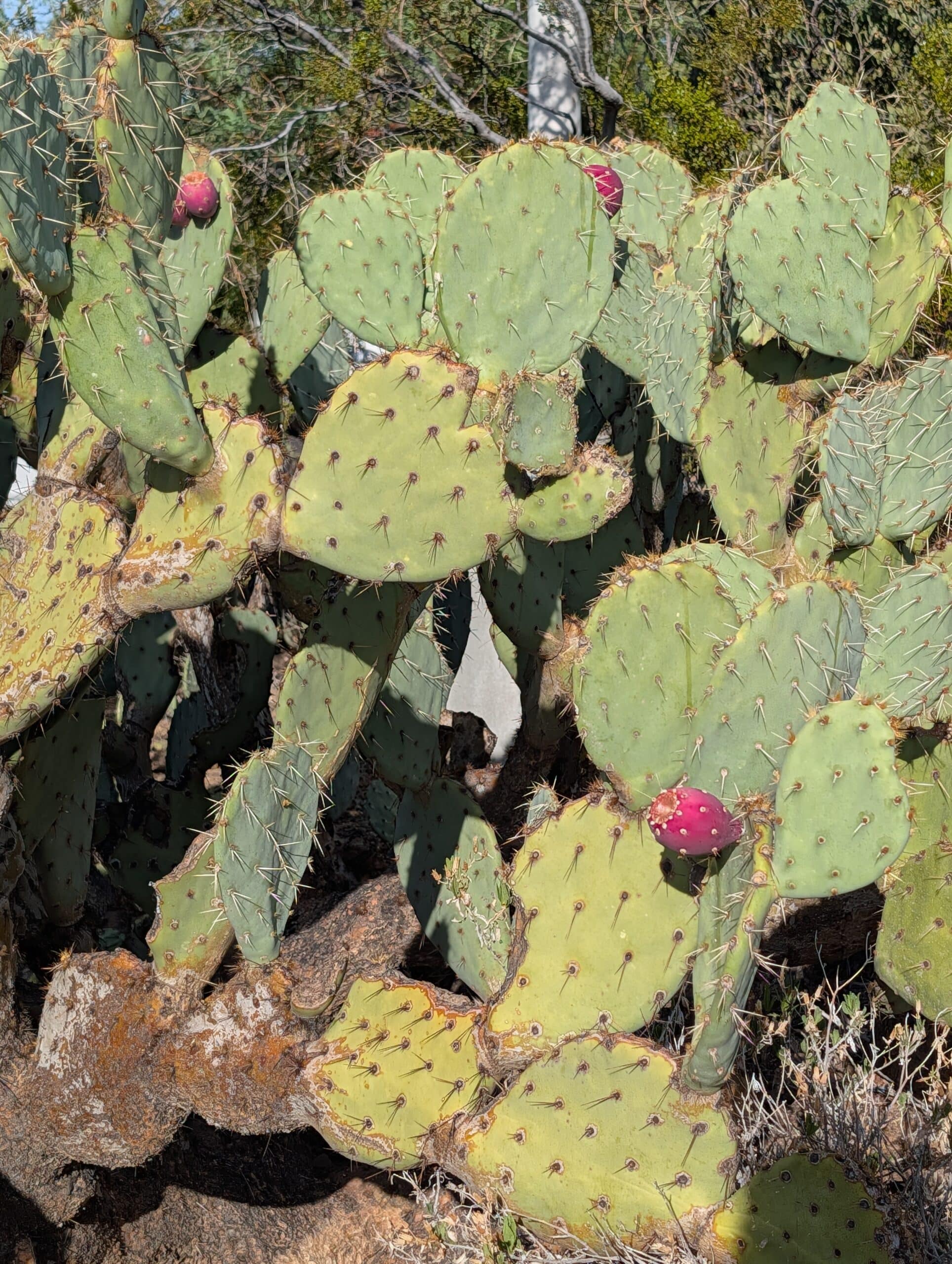
Prickly pears are the fruit of the prickly pear cactus, one of the most common cacti in the Sonoran Desert. In Spanish, the fruit is called tuna, and you may see them labeled that way in Phoenix grocery stores.
Prickly Pears vs. Nopales
The prickly pear cactus gives you two edible parts:
- Prickly Pears are the egg-shaped fruits that grow along the edges of the pads. They're sweet, juicy, and full of small, hard seeds. This is what you'll use for jelly.
- Nopales are the flat, green pads. You can cook them as a vegetable in dishes like tacos and scrambles, but they aren't used for jelly.
Colors and Varieties
Prickly pears come in a few colors. The ones growing wild around Phoenix are usually deep red to magenta when ripe. Grocery stores often carry green or yellow varieties too. These taste milder and will make a lighter-colored jelly. For jelly I always use the deep red variety.
Where to Find Prickly Pears in Phoenix
You may not have to go far. Check your own yard, or ask a neighbor with a prickly pear cactus if you can pick some. Most people are happy to share. I picked mine in mid-August from a neighbor's yard.
If you're foraging
- Always ask permission before picking on someone else's property.
- Skip cactus right next to busy roads, which can collect exhaust and dust, or areas that may have been sprayed with pesticides.
- Don't harvest in parks or preserves without checking the rules first. Many prohibit it.
If you don't have cactus nearby, you can buy them at Food City or at Americas Produce (550 N 35th Ave, Phoenix, AZ). Look for fruit that's firm, brightly colored, and free of mold or soft spots.
How to Harvest Prickly Pears Safely
Cacti are pokey, so the right tools make all the difference. Prickly pears have two kinds of spines, the large spines you can see and glochids. These are tiny hair-like spines that come off at the slightest touch and are much harder to get out of your skin.
What Tongs To Use
Tongs keep your hands away from the spines, but not all tongs work. Silicone and rubber tongs grab onto the glochids and hold them. The first time I picked prickly pears, I used silicone tongs, and I still can't get all the spines out of them. Metal tongs work best because you can rinse them clean and reuse them without stray spines.
For extra protection, wear thick gloves made for handling cacti. When I collect the fruit, I use a five-gallon bucket because it's easy to carry and easy to clean. Plastic bags don't work as well, since the spines can poke right through.
If you get glochids in your skin, press a piece of packing tape over the area and pull it off to lift them out. For just a few, tweezers work too.
How to Tell When Prickly Pears Are Ripe
Check the base of each fruit, where it attaches to the pad. A ripe prickly pear has no green anywhere, including at the base. A tip I learned while foraging: if you see wasps or other insects around a cactus, there's probably ripe fruit nearby. Don't pick any prickly pears that wasps are eating or living in. Ouch!
Before you pick, brush the fruit with a tree branch to knock off some of the glochids. Then grip the fruit with your tongs and give it a gentle twist. Ripe fruit comes off easily. Once you've collected them all, soak the fruit in a bucket of water to loosen and remove even more spines.
How to Juice Prickly Pears for Jelly
To make an awesome jelly, you'll need really tasty juice. For my batch, I used about 20 to 30 prickly pears. I boiled the whole fruits until soft, then pressed them to release the juice and strained it through a nut milk bag. You could use a fine mesh strainer as well. You'll have a lot of leftover skins, which you can compost.
My best advice is to make a big batch. Prickly pear season doesn't last long, and the juice freezes well, so you can make jelly any time of year.
What made this Jelly a Winner
For this jelly, I did a test batch and then a final batch, using a recipe I already knew well and had made before. After tasting the first batch, I knew the flavor was right. It isn't too sweet, and the cactus flavor really comes through.
The Arizona State Fair doesn't share judges' feedback, so I don't know exactly how I scored. I do know my headspace was a little off. Entries are judged on:
- Food safety: the lid has to be properly sealed (a popped lid is out)
- Jar size: using the correct jar (8 ounces)
- Clarity: how clear and bright the jelly looks
- Headspace: the gap between the jelly and the lid
- Taste
A Dietitian's Food Safety Note
Prickly pear juice is naturally low in acid. Acid helps the pectin set, and enough acid is what makes jelly safe to can in a water bath. Low-acid foods can't be water bath canned on their own, because the boiling-water temperature isn't high enough to destroy Clostridium botulinum spores. Adding acid lowers the pH to a level where those spores can't grow.
That's why this recipe uses bottled lemon juice instead of fresh. Bottled lemon juice has a consistent acidity, while fresh lemons vary from fruit to fruit. Don't reduce or skip the lemon juice, even if you'd like a stronger cactus flavor.
For tested canning methods and processing times, including altitude adjustments, check the National Center for Home Food Preservation.
Why Didn't Prickly Pear Jelly Set?
The most common jelly problems are opposites: it doesn't set at all, or it sets so firmly it turns into a cube. I've had both, and through some trial and error I've figured out what causes them and how to fix them.
The first time I made jelly, I cut back the sugar, which is a very dietitian thing to do. It completely ruined the texture. What I didn't know at the time is that sugar does more than sweeten jelly. It works with the pectin to make the jelly gel, and it helps the jelly keep.
If you want less sugar, use a pectin made for low- or no-sugar recipes and follow its directions exactly. This recipe is low sugar and uses a low-sugar pectin. Don't just reduce the sugar in a regular recipe, especially if you plan to can it.
What causes runny jelly
Jelly can turn out runny for several reasons:
- Not enough acid
- The wrong amount of pectin for the amount of juice and sugar
- Not boiling long enough, or never reaching a full rolling boil
- Doubling the batch (make one batch at a time)
If you test before jarring and it's still runny, bring it back to a full rolling boil for 1 more minute and test again. The recipe card shows how to check the set with the spoon and plate tests.
If your jelly passed the tests but still looks loose after jarring, be patient. Jelly can take 24 to 48 hours to fully set, sometimes longer. If it's still runny after a few days, the National Center for Home Food Preservation has instructions for remaking unset jelly.
What causes jelly that's too firm
On the other hand, jelly can also end up too firm. That's what happened with my first batch: when it didn't set, I just kept adding pectin. Whoops!
- Boiling past the 1-minute mark
- Too much pectin
Frequently Asked Questions
You've got questions about jelly making, I've got answers.
The most common causes are not enough acid, the wrong amount of pectin for the amount of juice and sugar, not boiling long enough or never reaching a full rolling boil, doubling the batch, or reducing the sugar. If it's still runny before jarring, return it to a full rolling boil for 1 more minute and test again. If it's already jarred, give it 24 to 48 hours to fully set. If it's still runny after a few days, the National Center for Home Food Preservation has instructions for remaking unset jelly.
Yes. Prickly pear juice is naturally low in acid. Lemon juice helps the pectin set and lowers the pH enough to make the jelly safe for water bath canning. Use bottled lemon juice, since its acidity is consistent, and don't reduce or skip it.
Yes, this recipe is made with prickly pear juice, sugar, lemon juice, and pectin, with no animal products.
Yes. This recipe is low sugar and uses a low-sugar pectin. If you want less sugar, use a pectin made for low- or no-sugar recipes and follow its directions exactly. Don't just reduce the sugar in a regular recipe, or the jelly won't set.
It takes about 20 to 30 prickly pears to make the 3 cups of juice this recipe needs, which makes five to six 8-ounce jars.