Should You Get Your Omega-3 Levels Tested? A Real Client Case
Getting lab work done every year is important, but traditional testing often misses key factors that could help prevent future issues. One of those areas is omega-3s. These typically aren't included in an annual visit and can cost a lot of extra money to add on to a specialty lab request.
Fortunately, there is an at-home test that is accurate and becoming the gold standard of omega-3 testing. I've used it numerous times myself and with past clients.
What is an Omega-3 Test, Exactly?
An omega-3 test shows the level of omega-3 and omega-6 fats in your blood. It focuses on three main markers: EPA, DHA, and the Omega-3 Index. These give a clearer picture of your status than a food log alone.
Research from groups like OmegaQuant has helped define how this marker connects to cardiovascular risk.
What An Omega-3 Test Measures
This test measures EPA (eicosapentaenoic acid) and DHA (docosahexaenoic acid), the two long-chain omega-3s your body uses most.
- EPA: EPA plays a role in inflammation and heart health.
- DHA: DHA supports brain and eye function.
- Omega-3 Index: reflects the percentage of EPA and DHA in your red blood cell membranes. This shows longer-term intake over the past few months.
The Omega-3 Index Plus test also measures the Omega-6:Omega-3 ratio, which can be especially useful for plant-based eaters, since vegetable oils like soybean, corn, and sunflower oil, along with many nuts and seeds, are naturally higher in omega-6.
Omega-6 isn't inherently bad when balanced with omega-3 intake. This ratio in the Plus test helps show where you stand.
Your body can make small amounts of DHA and EPA from plant sources like flax or chia, but the conversion is limited. That's why blood levels can differ a lot from intake on paper.
Conversion of ALA to EPA and DHA
Even with a diet rich in flax, chia, and walnuts, your body converts less than 8% of that ALA (alpha-linolenic acid) into EPA and under 4% into DHA (1,2). The rest stays as ALA, which your body can use for other things like energy, cell membrane structure, and stored fat reserves.
A few things affect the ALA to EPA and DHA conversion rate:
- Genetics: some people are simply wired to convert less, regardless of diet.
- Omega-6 intake: ALA and linoleic acid (an omega-6) compete for the same enzymes, so a diet heavy in omega-6 can crowd out ALA conversion.
This is why someone can eat flax and chia every day, feel confident about their omega-3 intake, and still test low on an Omega-3 Index.
If you're plant-based, algae oil is a more reliable way to raise EPA and DHA directly, since it skips the conversion step altogether.
What's Considered Low, Moderate, and Optimal
Here's how to interpret the results in practice. An Omega-3 Index below 4% is considered low and linked to higher cardiovascular risk. Between 4% and 8% is considered moderate. A target range above 8% is associated with better heart health outcomes. Many people fall short of the optimal range, even if they believe they're getting enough.
How the Omega-3 Test Works
With a simple at-home testing kit, the process is straightforward and fairly non-invasive. It does require a blood sample and is performed with a simple finger prick. The kit comes with step-by-step directions and all the tools needed to complete the sample. In my experience, sample collection is simple and easy, requiring only one drop of blood.
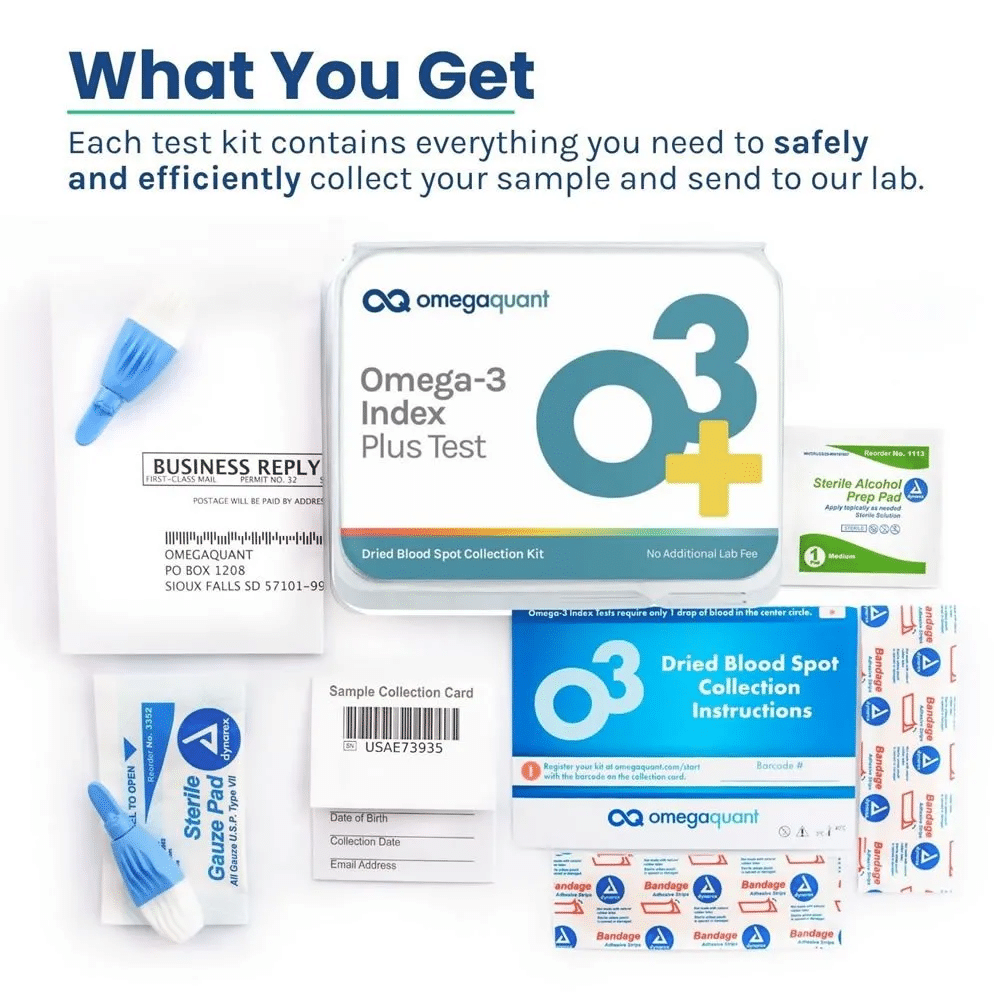
After collecting and packaging the results, send them back using the prepaid envelope. Once shipped, processing typically takes 7-10 days to receive results.
If you have an HSA or FSA card, it may cover the cost depending on your plan. The typical price for a test is around $55.
Real Life Omega-3 Results
This person has been working to improve her omega-3 intake. I suggested she have her omega-3 levels checked because she doesn't eat fish or other high-omega-3 foods like nuts or seeds.
We started with the Basic Omega-3 Test, and her first test was in February, when she received a result of 4.58%, which was outside the desired range.

After her first test, she started supplementing with 1,400 mg daily. Once she settled into a consistent routine, her second test showed her Omega-3 Index had climbed to 7.55% in March, close to the optimal range and a significant improvement.

Check out my favorite Algae Omega-3
She also had a reading in May that slightly increased again to 7.57%, bringing it closer to the desirable range and much better than her initial baseline result.

A year later, she tested again, and her numbers had dropped slightly to 7.42%. This is likely because she'd switched to a different dose and a different supplement from Costco. Even switching brands or doses can shift your results, which is exactly why retesting matters.

The standard recommendation is to retest at least every 4-6 months until your levels are within normal limits, then periodically after that to make sure you're staying there. This patient is still working to improve Omega-3 levels but has made great progress so far!
In this case, a full year passed between her third and fourth test, and her number dipped slightly in that gap. It's a good example of why consistent retesting matters, catching small shifts before they become bigger ones.
Who Should Consider Testing?
Omega-3 testing is important for many groups that benefit most from knowing their actual numbers rather than guessing.
- People who don't eat fish. Fish and seafood are the most common dietary source of preformed EPA and DHA. If they're not part of your regular diet for any reason, whether by preference, allergy, or access, your Omega-3 Index may be lower than you'd expect.
- Plant-based eaters. Vegans and vegetarians face this gap even more directly, since fish and seafood aren't part of your eating pattern. Even a diet rich in flax, chia, and walnuts may not be enough, since ALA conversion to EPA and DHA is limited. Testing takes the guesswork out of whether your current intake or supplement is actually working.
- Those with high triglycerides. EPA and DHA are well known for their role in supporting healthy triglyceride levels. If your triglycerides run high, testing can help show whether low omega-3 levels are part of the picture and whether supplementation is helping.
- If you're already supplementing but want to know if it's enough. Taking an algae oil supplement doesn't automatically mean your levels are optimal. Dosage, absorption, and consistency all play a role, and testing is the only way to confirm your current routine is doing its job.
If You're Thinking About Getting Tested
If you've read this far, testing is probably worth considering. Before you order, look for a test that reports EPA and DHA individually along with your full Omega-3 Index, backed by research,
I recommend OmegaQuant, and it is the test I use myself and with clients. There's very little prep involved. Just keep your current diet and supplement routine consistent leading up to your test, so your results reflect your real habits rather than a last-minute change.