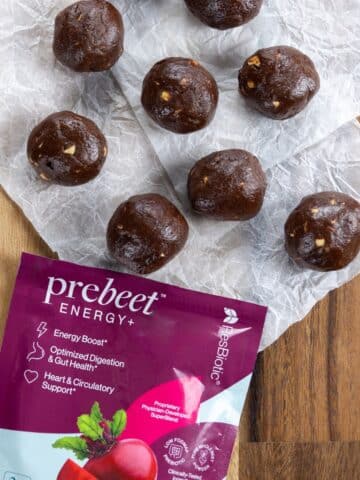
Zero Waste Energy Balls
The first time I made almond milk, I had no clue what to do with the leftover almond pulp and I really felt wrong about throwing it out. So I got creative and ended up with these delicious no-waste energy balls.
This recipe turns that leftover pulp into delicious, no fuss zero waste energy balls. You get almond milk and a tasty snack from the same batch; a total win-win all around.
Making Almond Milk
When you make almond milk at home, the last step is to strain after blending. Straining gives the milk a smoother, more commercial-like texture, but it also removes fiber, protein, and other nutrients. Most people prefer this texture, since the pulp can feel thick; like a super-pulpy orange juice, but creamy.
I've yet to find an almond milk I liked with all the pulp included, and Erewhon doesn't even make their pulp inclusion that way. That said, you can leave some pulp in the milk to boost nutrients without sacrificing texture too much. I recommend this approach when making homemade nut milks it's a good balance of creaminess and nutrition.
During straining, the fibrous parts of the almonds are caught. You can strain almond milk using a nut milk bag, cheesecloth, or even a specialized machine, depending on your setup and how smooth you want the milk to be.
What is Almond Pulp?
Almond pulp is the soft, grainy byproduct that is leftover after straining homemade almond milk. When almonds are blended with water, most of the liquid and some of the fats are extracted into the milk, while the fibrous portion stays behind as "pulp".
Most people throw it out, but this leftover pulp is nutrient-rich and can be used in other creative ways. Like making these zero waste energy balls.
Fiber
Almond pulp is a good source of dietary fiber since most of the skins and fibrous material stay in the pulp. Fiber supports digestion, helps keep you full, and contributes to stable blood sugar levels.
Finding a way to use the pulp is important not only to reduce food waste, but because 95% of people don't get enough fiber each day. The general recommendation is 38 grams for men and 25 grams of fiber for women each day (1). These balls have around 3.5 grams of fiber per serving.
Protein
While some, but not much of the protein transfers to almond milk, a good amount stays in the pulp. This makes it a great way to boost plant-based protein in snacks, baked goods, or smoothies. Each serving has roughly 5 to 6 grams protein.
Healthy Fats
Even though much of the fat is extracted into almond milk, almond pulp still has heart-healthy monounsaturated fats. These fats support satiety and overall cardiovascular health. A study in Current Developments in Nutrition suggests that almonds may positively impact heart health by reducing LDL-cholesterol, an average of ~5% reduction in pooled results.
Almond Pulp vs Almond Flour
Almond pulp and almond flour are often viewed as the same, but they're not the same.
These are the quick differences: almond flour is made by grinding blanched almonds into a fine, dry powder. Almond pulp, on the other hand, is the moist, fibrous leftover from almond milk making.
Texture: Almond flour is dry and powdery, while almond pulp is soft and slightly damp.
Use: Almond flour works well in recipes that need structure, like cakes or cookies. Almond pulp is best in recipes where moisture is welcome, such as energy bites, smoothies, or quick breads.
Nutrition: Both have fiber, protein, and healthy fats, but almond pulp is lower in calories and fat since much of the oil is extracted during milk-making.
If you want a flour-like texture, you can dry or dehydrate almond pulp and then blend it into a finer powder. This creates a lighter substitute you can use in some almond flour recipes.
Ingredients You'll Need

Almond Pulp: High in fiber and healthy fats, almond pulp adds bulk and most of the nutrients you'll get from this recipe. For other recipes, you can dry it and grind it into flour to even more zero/ low food waste recipes.
Cocoa Powder: Adds chocolate flavor without added sugar and provides antioxidants. Unsweetened cocoa works best; Dutch-processed will give a smoother taste but it's the baker's choice!
Vegan Protein Powder (Vanilla): Boosts protein content to help keep you full. Choose a brand you like and check for minimal added sugar; see my protein powder guide for tips.
Maple Syrup: A classic vegan sweetener that binds ingredients together. You can swap with agave or date syrup for a different flavor.
Tahini: Adds healthy fats, protein, and a nutty flavor. Can be swapped with other nut or seed butters like almond or sunflower.
Chia Seeds: High in fiber and plant-based omega-3s that help thicken the mixture while offering nutrients in an easy way. Flax Seed Meal: Or ground up flaxseeds. These add fiber, protein, and omega-3s. Toast lightly for a nuttier flavor.
Recipe

Zero Waste Energy Balls
Ingredients
- 1 cup almond pulp The fiberous part that is strained out from making the standard 4 cups of almond milk.
- 2 tablespoons cocoa powder
- ¼ cup vegan vanilla protein powder
- ¼ cup maple syrup
- ½ cup tahini
- ⅛ cup chia seeds
- ⅛ cup ground flaxseed (flaxseed meal)
- hemp seeds, coconut, sesame seeds, freeze dried strawberries mashed, or any other toppings you want to roll the balls in
Instructions
- In a medium bowl, combine the almond pulp, cocoa powder, protein powder, chia seeds, and flax seed meal. Stir until evenly mixed.
- Add the maple syrup and tahini to the dry ingredients. Use a spoon or your hands to mix until the mixture forms a sticky dough.
- Scoop about 1 tablespoon of the mixture and roll it into a ball. Repeat until all the mixture is used.
- Roll each ball in your choice of toppings for extra texture and flavor.
- Place the balls on a plate or tray and refrigerate for at least 30 minutes to firm up.
- Store the energy bites in an airtight container in the refrigerator for up to a week.
- If you liked this recipe please rate it a five star and share with a friend!
Notes
Bringing it All Together
These energy bites are packed with fiber, protein, and healthy fats, making them a perfect snack or quick breakfast. They're easy to customize with your favorite toppings or nut butters. Keep them stored in the fridge to stay fresh and firm. If you try this recipe, tag me on Instagram so I can see your creations!